12.02.2010
 Posted by
Mike |
Posted by
Mike |

The Threefold Lotus Sutra has been described as a noble work of art, difficult to plumb the depths of, but the mere attempt is life transforming. On the surface it is full of fantastic tall tales of supernatural beings and events, described in an ancient vocabulary rich with exaggeration which continuously focuses on a principled way of life the Buddha espoused for all of us. Passages such as:
I'm told, one needs to read the sutra first, then experience the merits of the sutra first hand, and then dedicate to its practice. At every stage its effects are felt.
The Buddha said:
As someone who has spent a pile of money on self-improvement books, if the sutra makes good on only smidgen of these changes, it will have been a great investment in my time.
It's best to have a companion guide when you read the sutra because there are numerous Sanskrit names and terms that need explaining, and you will need help to sort out what passages can be taken literally and what are symbolic, along with an accepted interpretation of the meaning. I am using the "Buddhism For Today" by Nikkyo Niwano.
I'm also very fortunate to be part of a study group at my local Buddhist church, Rissho Kosei-kai, in Federal Way, WA. Rissho Kosei-kai is a worldwide Buddhist organization founded in Japan in 1938 by Nikkyo Niwano and Myoko Naganuma. It combines the wisdom of both the Lotus Sutra and the foundational teachings of Shakyamuni Buddha. Its purpose is to bring these trans-formative teachings to the modern world. Rissho Kosei-kai is a Buddhist organization composed of ordinary men and women who have faith in the Buddha and strive to enrich their spirituality by applying his teachings in their daily lives. At both the local community and international levels, they are very active in promoting peace and well-being through altruistic activities and cooperation with other organizations. With headquarters in Tokyo, Rissho Kosei-kai now has some 2.05 million member households in 245 churches throughout Japan as well as in other countries.
References
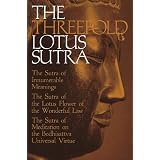
Threefold-Lotus-Sutra
1. The Threefold Lotus Sutra by Bunno Kato and Yoshiro Tamura, 1989
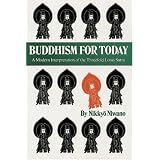
Buddhism For Today
2. Buddhism for Today: A Modern Interpretation of the Threefold Lotus Sutra by Nikkyo Niwano, 1989
Only after kotis and kotis of myriads of kalpas of inconceivable reach, does the time finally arrive when this Dharma Flower Sutra can be heardreveal both the literary skill of the original translators and the truth that to embark on the path takes patience and perseverance.
I'm told, one needs to read the sutra first, then experience the merits of the sutra first hand, and then dedicate to its practice. At every stage its effects are felt.
The Buddha said:
My good children! First, this sutra can:
Make an unawakened Bodhisattva aspire to the mind of awakening,
Make one without kindness give rise to the mind of compassion,
Make one who likes slaughter give rise to the mind of great mercy,
Make a jealous one give rise to the mind of joy for others,
Make one with attachments give rise to the mind of non-attachment,
Make a miserly one give rise to the mind of generosity,
Make and arrogant one give rise to the mind of keeping the precepts,
Make a lazy one give rise to the mind of diligence,
Make a distracted one give rise to the mind of meditation,
Make an ignorant one give rise tho the mind of wisdom,
Make one who does not think of liberating others give rise to the mind of liberating them,
Make one who commits the ten evils give rise to the mind of the ten virtues,
Make one drawn to conditioned phenomena aspire to overcome them,
Make one who regresses build the mind of progressing,
Make one who commits defiled acts give rise to the mind of undefilement, and
Make one with many delusive passions give rise to the mind of extinguishing them.
As someone who has spent a pile of money on self-improvement books, if the sutra makes good on only smidgen of these changes, it will have been a great investment in my time.
It's best to have a companion guide when you read the sutra because there are numerous Sanskrit names and terms that need explaining, and you will need help to sort out what passages can be taken literally and what are symbolic, along with an accepted interpretation of the meaning. I am using the "Buddhism For Today" by Nikkyo Niwano.
I'm also very fortunate to be part of a study group at my local Buddhist church, Rissho Kosei-kai, in Federal Way, WA. Rissho Kosei-kai is a worldwide Buddhist organization founded in Japan in 1938 by Nikkyo Niwano and Myoko Naganuma. It combines the wisdom of both the Lotus Sutra and the foundational teachings of Shakyamuni Buddha. Its purpose is to bring these trans-formative teachings to the modern world. Rissho Kosei-kai is a Buddhist organization composed of ordinary men and women who have faith in the Buddha and strive to enrich their spirituality by applying his teachings in their daily lives. At both the local community and international levels, they are very active in promoting peace and well-being through altruistic activities and cooperation with other organizations. With headquarters in Tokyo, Rissho Kosei-kai now has some 2.05 million member households in 245 churches throughout Japan as well as in other countries.
References
Threefold-Lotus-Sutra
1. The Threefold Lotus Sutra by Bunno Kato and Yoshiro Tamura, 1989
Buddhism For Today
2. Buddhism for Today: A Modern Interpretation of the Threefold Lotus Sutra by Nikkyo Niwano, 1989
Subscribe to:
Post Comments (Atom)
Subscribe Here


 Posts
Comments
Posts
Comments
0 comments:
Post a Comment